AC Blowing Warm Air: Causes and Fixes for Texas Homes
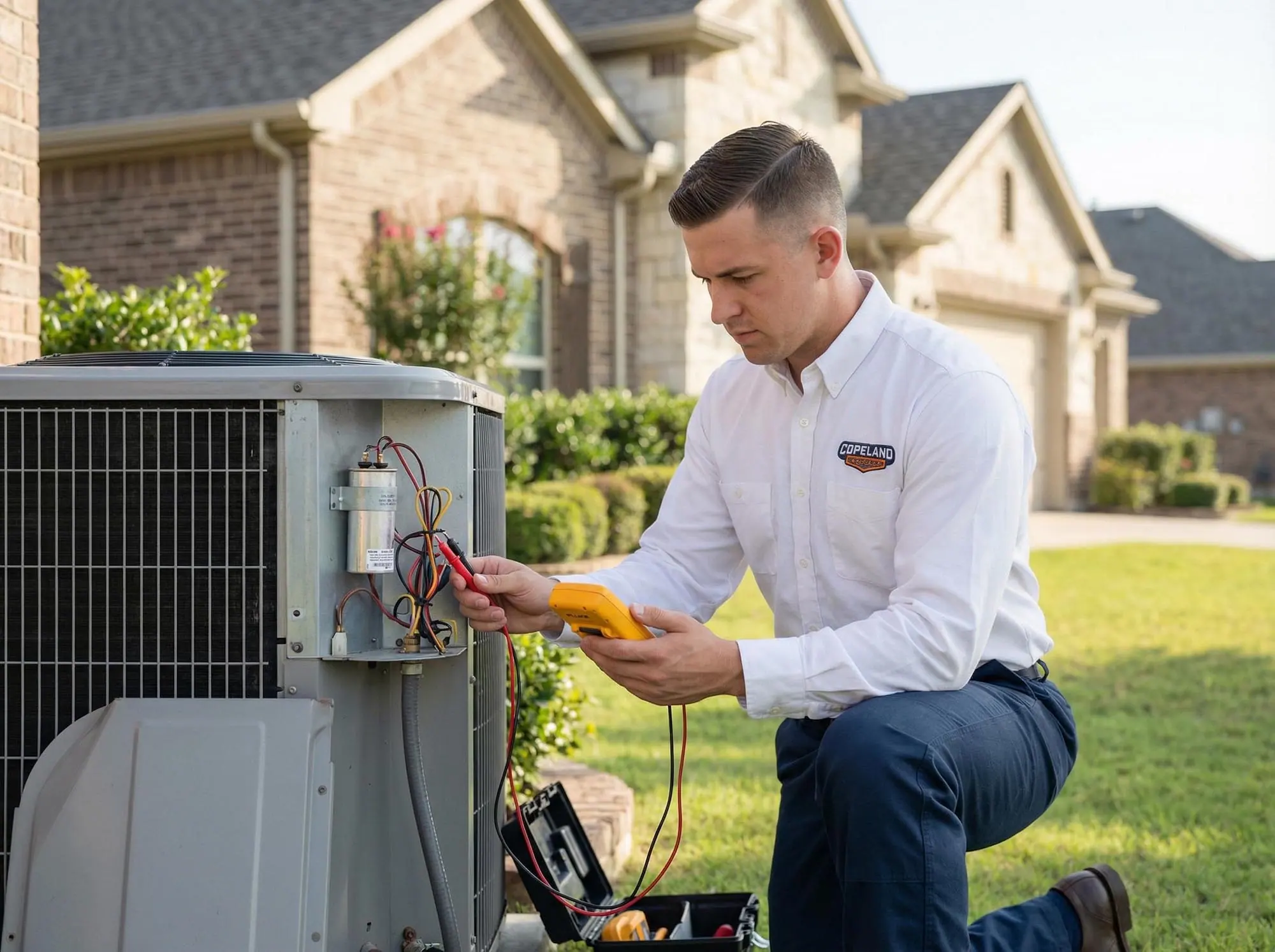
An AC that blows warm air is most often running into one of seven problems: the thermostat is on the wrong setting, the air filter is clogged, the outdoor unit is blocked, a breaker has tripped, the evaporator coil has frozen, a capacitor has failed or the refrigerant is low. The first four you can check and fix yourself in minutes. The last three need a technician, and the rules for refrigerant and electrical work explain why.
Think of a Rowlett family on a 98-degree afternoon, with the fan blowing and the air coming out the same temperature as the room. The system is running, so the problem is not power. The question is which part of the cooling cycle stopped doing its job, and the table below helps you narrow it down.
Why an AC blows warm air
An air conditioner moves heat out of your house. The indoor coil absorbs heat from the air, the refrigerant carries it outside, and the outdoor unit releases it. When any step breaks, the blower keeps moving air through the ducts, but the air no longer gets cooled.
That is why warm air comes with a running fan. Thermostat settings, filters and electrical parts break the chain in different places. Knowing which one helps you decide between a quick fix and a service call.
AC blowing warm air: causes, signs and who fixes it
| Cause | How to spot it | Who fixes it |
|---|---|---|
| Thermostat set to Heat, or fan set to On | Display shows Heat, or air only feels warm between cooling cycles | You |
| Clogged air filter | Weak airflow, dust packed into the filter | You |
| Blocked or dirty outdoor unit | Leaves, weeds or a cottonwood coat on the fins | You, with the power off |
| Tripped breaker | Outdoor unit silent, nothing running outside | You reset it once, then a technician if it trips again |
| Frozen evaporator coil | Ice on the indoor coil or the copper lines | You thaw it, a technician finds the cause |
| Failed capacitor | Humming from the outdoor unit, fan or compressor not starting | Technician |
| Low refrigerant from a leak | Ice, hissing or a system that never reaches the set point | Technician |
Fixes you can try first
Start at the thermostat. Trane says to make sure it is set to Cool and did not get bumped to Heat. It also advises setting the fan to Auto, because the On setting keeps blowing air even when the AC is not running, which can feel warm between cycles.
Check the filter next. ENERGY STAR says to check and change air filters once a month, and Trane says a clogged filter can reduce or block airflow. In a Texas summer, when the system runs most of the day, a monthly check is realistic.
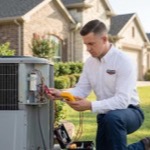
Then walk outside. Trane recommends keeping the area clear at least two feet on all sides and four feet above the outdoor unit. Turn the power off, then pull away weeds and debris. Rinse the fins gently with a hose, never with a pressure washer. A blocked condenser cannot release heat, and the air inside stays warm.
Check the breaker for both the indoor and outdoor units. Reset it once, then leave it off and call when it trips again right away, since Lennox advises professional help for electrical issues.
What a frozen coil means for warm air
Ice on the indoor coil blocks the airflow that carries cool air into your home. Trane lists a dirty filter, which restricts airflow, and low refrigerant as the main causes of a frozen coil. A dirty coil can freeze as well.
When you find ice, turn the AC off at the thermostat and let it melt completely. Trane says to set the fan to On to speed the thaw, never chip the ice, and change the filter before restarting. A coil that freezes again after a clean filter points to a deeper cause, and Lennox says it is time to call a certified technician.
Problems that need a technician
A failed capacitor is a common repair behind a running-but-warm AC. Carrier says a distinct humming from the outdoor unit usually means a motor trying to start, and that capacitors store charge even after the power is off. Carrier tells homeowners not to attempt capacitor replacement themselves.
Low refrigerant is the other big one. Refrigerant is not consumed, so a low charge means a leak, which Lennox says usually calls for a professional. EPA rules prohibit intentionally venting refrigerant, and only Section 608 certified technicians can buy it for stationary air conditioners. Adding refrigerant from a can is not an option for a homeowner.
Texas also regulates the work. The Texas Department of Licensing and Regulation says contractors who install, repair or maintain air conditioning, refrigeration or heating systems must hold a TDLR license. Copeland holds Texas HVAC license TACLB121002E, and you can verify any contractor through the TDLR license search.
What AC repair costs in North Texas
Copeland’s AC repair page says most AC repairs range from $150 to $600 depending on the issue. Simple fixes like a capacitor or contactor replacement fall on the lower end, while compressor or refrigerant leak repairs sit on the higher end. We give an upfront quote before any work starts, and we offer free home diagnostics.
Ask for the replacement option on paper too when the repair estimate is large. Copeland’s rule of thumb is that repair usually makes sense when the system is under 10 years old and the repair costs less than half the price of a new unit. Older systems, systems that use R-22 refrigerant and systems that need frequent repairs often justify replacement instead. Our AC replacement cost guide explains what a new system includes.
Questions Texas homeowners ask about an AC blowing warm air
Get your AC cooling again in Forney and nearby
Call Copeland at (469) 720-4440 if your AC is blowing warm air and the basic checks did not help. Our emergency AC repair team is available around the clock in Forney, Rockwall, Rowlett, Heath, Wylie and the towns we serve, and we do not charge extra for after-hours calls.
Tell the dispatcher what you already checked, such as the thermostat setting, the filter and the breaker. You can also use the contact page to book a visit.