AC Unit Leaking Water: Causes and What to Do Right Now
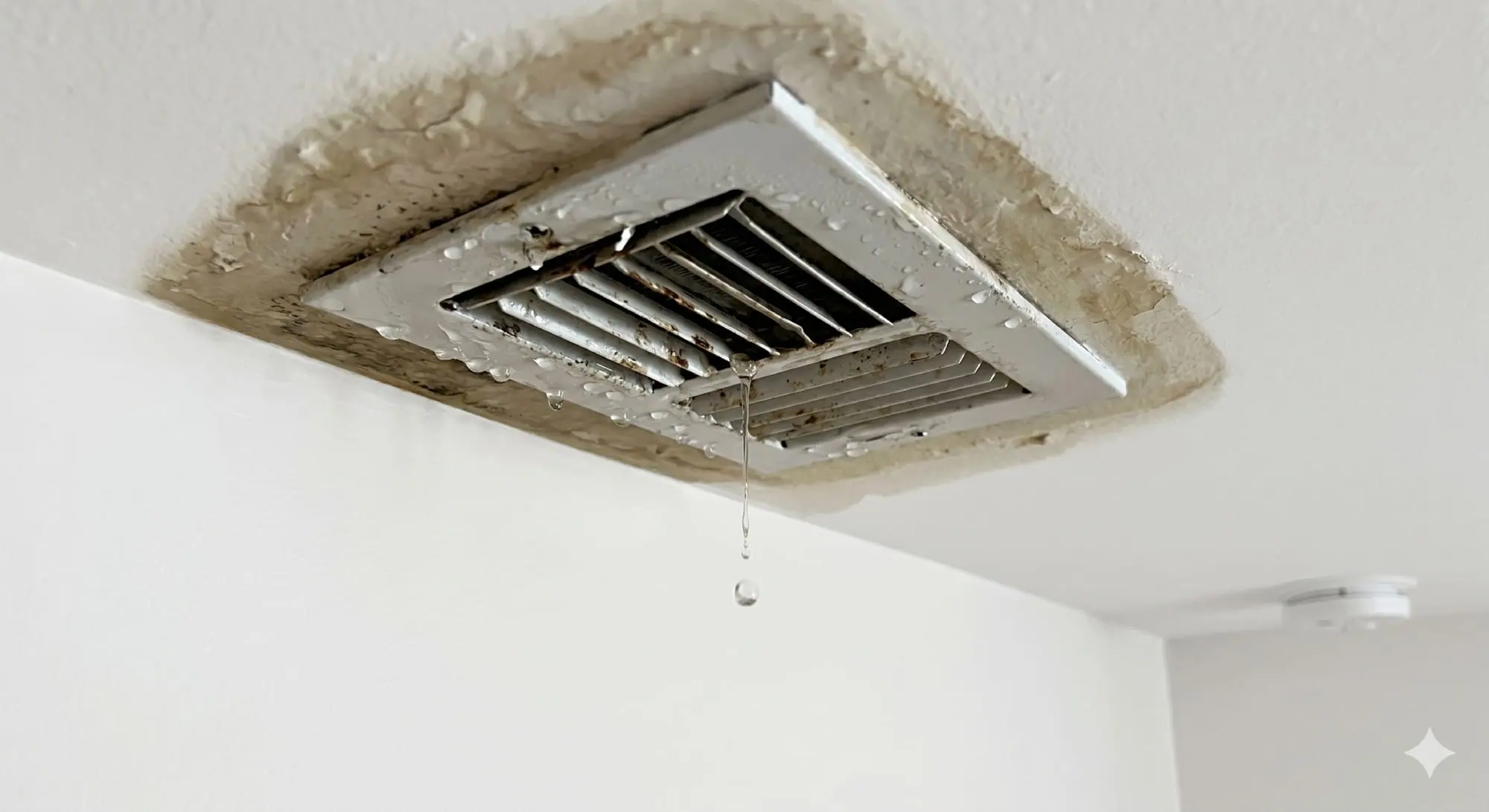
When your AC unit leaks water inside your home, turn the system off at the thermostat or the breaker, then mop up and call a technician. The most common causes are a clogged condensate drain line, a cracked or rusted drain pan, a frozen coil that is melting or a dirty filter. Trane says to shut the system off, clean up the water and call a technician, since running it can make the damage worse.
A Forney homeowner who finds a wet patch under the hallway air handler or a stain spreading on the ceiling below the attic unit does not have a plumbing leak. Their AC makes water every time it runs, and something in the path that carries that water away has failed. This guide covers what to do first and how to find the cause.
What to do right now when your AC is leaking water
Work through these steps in order. Each one protects your home before you look for the cause.
- Turn the AC off at the thermostatSwitching it off stops new condensation. Also turn the system off at the breaker when water is near electrical parts or dripping from a ceiling fixture.
- Clean up the waterMop or towel up standing water and move furniture and rugs away from the spot. Water that sits on flooring or drywall causes damage fast in a humid Texas summer.
- Check the air filterTrane says a dirty filter can cause the coil to freeze, and a melting coil drips more water than the drain can handle. Replace a packed filter.
- Look for iceIce on the indoor coil or the copper lines means the coil froze. Leave the system off until the ice melts completely.
- Call a technicianSchedule a repair when the water returns after steps 1 to 4 or you cannot find a cause. Copeland offers free home diagnostics, so you know what is wrong before you spend anything.
AC unit leaking water: why it happens
Your air conditioner pulls moisture out of the air as it cools. That moisture collects on the indoor coil and drains into a pan, then travels through a drain line to the outside. Water inside the house means something broke along that path.
The condensate drain line is the usual suspect. It clogs with dirt, debris or mold, and the pan fills until the water spills over. Lennox says a tripped float switch is typically caused by a clogged condensate line, and those switches exist to shut the system down before water reaches the floor.
The drain pan can fail too. Trane says a clogged, cracked or rusted drain pan can leak or overflow, and notes that the pan can clog with dirt and debris or mold over time. An overflow switch shuts the system down when water reaches a set level, and Trane says a licensed technician can install one.
Other causes of an AC water leak
A frozen evaporator coil is a major one. When the ice melts, it produces far more water than the pan expects. Trane says a dirty filter, a dirty coil, low refrigerant or a refrigerant leak can all cause a coil to freeze, which means the water leak is a symptom of a bigger problem.
Low refrigerant is a cause a homeowner cannot fix. Because refrigerant is not consumed, a low charge points to a leak, and Lennox says that usually needs a professional. EPA rules also say only Section 608 certified technicians can buy refrigerant for stationary air conditioners, and venting it is prohibited.
Installation problems add a last category. An air handler that sits slightly off level, or a drain line that does not slope correctly, will cause water to collect even when everything else is clean. This is more common in attic and closet installations in Forney and Rockwall homes, where the unit is out of sight and hard to reach.
Is some dripping normal?
Some water outside is expected. In humid weather, the drain line outside your home may drip, because it carries away the moisture the AC removed. Water inside the house, around the air handler or on a ceiling is never normal.
Check where the drip comes from when you see water at the outdoor unit and are not sure. A small drip from the drain line outside is normal. Pooling around the base of the indoor unit is not.
How to prevent AC water leaks
Change the filter on a schedule. ENERGY STAR says to check and change air filters once a month, and a clean filter keeps the coil from freezing. Trane says to change filters at least every 90 days without pets and every 30 to 60 days with pets.
Schedule a tune-up before the summer heat arrives. Copeland says many of the breakdowns we see, such as failed capacitors, refrigerant leaks and clogged drain lines, are things we catch and fix during a tune-up before they become emergencies. The AC tune-up page lists what a visit covers, and a membership plan handles the scheduling.
Ask your technician about an overflow switch. Trane describes it as a device that shuts the system down when water reaches a set level. An air handler that sits over finished ceilings benefits most from that safeguard.
Questions Texas homeowners ask about an AC leaking water
Call Copeland for an AC water leak in Forney
Call Copeland at (469) 720-4440 when your AC is leaking and the five steps did not stop it. Our AC repair team covers Forney, Rockwall, Rowlett, Heath, Wylie and the towns around them, and we offer same-day service in most cases.
We will check the drain line, the pan and the coil, and quote the work before we start. You can also use the contact page to book. Copeland holds Texas HVAC license TACLB121002E.